
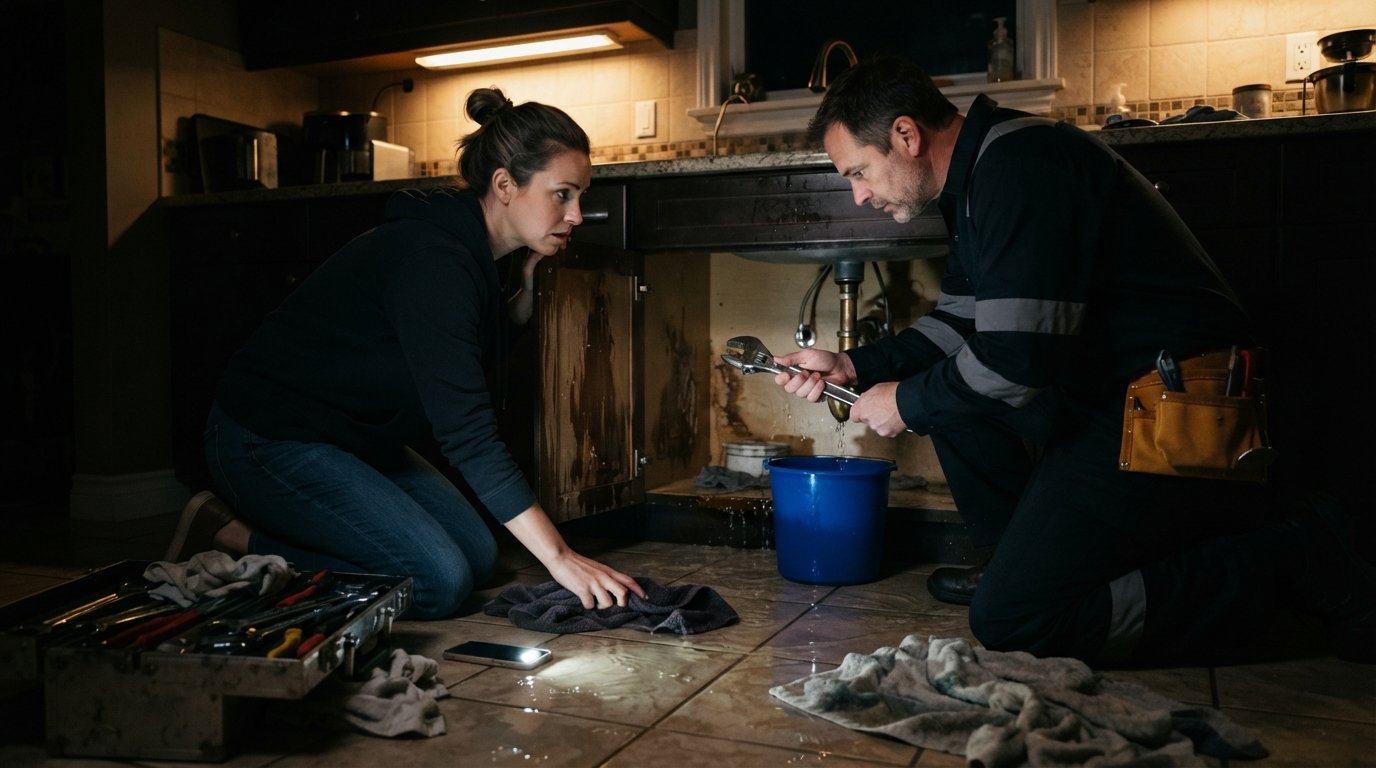
How to Use a Small Loan for an Emergency Plumbing Leak
Estimate the repair, pick the right loan type, and dodge contractor scams. Learn how to use a small loan for an emergency plumbing leak and protect your budget.

By Levi Parker
A burst pipe at 2 a.m. or a water heater leaking through the ceiling does not wait for your next paycheck. When water is pooling on the floor, you need a plumber now, and you need a way to pay for the repair without draining every account you have. A small loan can bridge that gap, but only if you use it strategically. This guide walks you through estimating the repair cost, choosing between short-term and installment options, avoiding contractor scams, and using a loan connection service like LendersCashLoan to compare offers from multiple lenders in minutes. By the end, you will know exactly how to use a small loan for an emergency plumbing leak without turning a plumbing crisis into a long-term financial headache.
Why a Plumbing Emergency Demands a Fast Financial Plan
Plumbing emergencies are uniquely stressful because the damage compounds by the hour. A slow leak under the sink might cost a few hundred dollars to fix, but if it soaks into cabinets and flooring, the repair bill can climb into the thousands. Water damage restoration alone often runs $1,200 to $5,000 depending on the extent, and that is before the plumber's invoice. The longer you wait, the more expensive the problem becomes, which is why speed matters as much as the loan amount itself.
Most homeowners do not have a dedicated emergency fund large enough to cover a major plumbing repair. According to consumer finance surveys, a significant share of adults would struggle to cover a $1,000 unexpected expense. A small loan, typically ranging from $100 to $5,000 through connection services like LendersCashLoan, can fill that gap quickly. The key is to treat the loan as a targeted tool for a specific, time-sensitive repair, not as a general purpose cash infusion.
Before you apply anywhere, get a clear picture of what you are actually facing. That means calling a licensed plumber for an emergency diagnostic visit, even if it costs a service call fee. A professional can tell you whether you are dealing with a simple valve replacement or a slab leak that requires cutting into the foundation. That diagnosis determines your loan amount, your repayment timeline, and whether you need to involve your insurance company.
Step One: Estimate the Repair Cost Before You Request a Loan
Requesting the wrong loan amount is one of the most common mistakes borrowers make during an emergency. If you borrow too little, you may need a second loan, which means double the fees. If you borrow too much, you pay interest on money you did not need. To estimate accurately, break the total cost into components and get quotes where possible.
Start with the plumber's estimate for the core repair. Emergency rates are higher than standard rates, often 1.5 to 2 times the normal hourly charge. Ask the plumber for a written breakdown that separates labor, parts, and any diagnostic fees. Then add secondary costs that homeowners often overlook: drywall repair after the plumber opens a wall, flooring replacement if water damage is extensive, mold remediation if the leak has been slow and hidden, and temporary measures like fans or dehumidifiers. A repair that seems like $400 can easily become $1,500 once restoration is included.
Use this simple framework to build your estimate:
- Plumber's emergency service call and diagnostic fee (typically $75 to $250)
- Core repair cost from the written estimate (varies widely by issue)
- Water damage restoration and drying (if applicable)
- Drywall, paint, or flooring repair after access work
- A 10 to 20 percent buffer for surprises discovered mid-repair
That buffer matters. Plumbers frequently discover additional problems once they open a wall or floor, such as corroded pipes or hidden mold. Having a small cushion in your loan amount prevents a mid-repair crisis. Once you have a realistic total, you can decide which loan type fits best. If the total is under $1,000 and you can repay within a few weeks, a short-term option may work. If the total is larger or you need more time, an installment loan with structured payments is usually the safer choice.
Step Two: Choose Between a Short-Term Loan and an Installment Loan
The two main loan structures available through connection services are short-term loans (including payday-style loans) and installment loans. Each has a different repayment rhythm, and choosing the wrong one for a plumbing emergency can create unnecessary financial pressure.
A short-term loan is designed to be repaid in a single payment or a few payments over a short period, often two to four weeks. It can be useful if you are confident a paycheck or tax refund is arriving before the due date and the repair cost is modest. However, short-term loans often carry higher annual percentage rates, and rolling one over into a new loan is expensive. They work best when the amount is small and the repayment timeline is certain.
An installment loan spreads repayment over multiple scheduled payments, often several months. For a plumbing emergency where the total cost is higher or your budget is tight, an installment structure gives you breathing room. You know exactly what you owe each month, and you can plan around it. The tradeoff is that you pay interest over a longer period, so compare the total cost of credit, not just the monthly payment.
Here is a quick decision guide:
- If the repair is under $1,000 and you will have the full amount within two to four weeks, a short-term loan may be sufficient.
- If the repair exceeds $1,000 or your next paycheck is already committed to rent and bills, choose an installment loan.
- If you are unsure, request offers for both structures through a connection service and compare the total repayment cost.
One practical advantage of using a connection service is that you can submit a single request and potentially receive multiple offers from different lenders. That lets you compare APRs, fees, and repayment terms side by side without filling out forms at five different websites. LendersCashLoan is a free connection service that matches borrowers with third-party lenders, and it explicitly welcomes applicants with less-than-perfect credit who meet basic income criteria. That matters in an emergency, when a denied application at one lender can waste hours you do not have.
If you are also managing other pressing expenses, such as moving costs or a rental deposit, you may find our guide on using a small loan for a security deposit helpful for understanding how lenders evaluate multiple financial obligations.
Step Three: Protect Yourself from Contractor Deposit Scams
Plumbing emergencies attract scammers. When homeowners are panicked and water is running, unethical contractors know they can pressure people into paying large deposits upfront with no written contract. Protecting yourself is as important as securing the loan itself.
Legitimate plumbers rarely demand full payment before work begins. A reasonable deposit for materials is normal, but it should be a modest portion of the total, and it should be documented. Be wary of anyone who shows up unsolicited after a leak, demands cash only, refuses to provide a written estimate, or pressures you to sign immediately. These are classic warning signs of a deposit scam.
Follow these protective steps before handing over any money:
- Verify the plumber's license and insurance through your state or local licensing board.
- Get a written contract that specifies the scope of work, materials, timeline, and payment schedule.
- Pay by credit card or check when possible, and never pay the full amount upfront.
- Ask for a lien waiver or receipt that confirms payment and releases you from future claims.
- Keep copies of all estimates, invoices, and communication for insurance or warranty purposes.
If a contractor insists on a large cash deposit before any work starts, walk away and call another plumber. The delay of a few hours is far less costly than losing your loan funds to a scammer. Once you have a signed contract and a clear payment schedule, you can time your loan disbursement to match the deposit and final payment dates.
Step Four: Apply Through a Connection Service and Compare Offers
With your repair estimate in hand and a vetted contractor selected, you are ready to request loan offers. The fastest path is an online connection service that submits your information to a network of lenders. LendersCashLoan uses a simple online request form that typically takes under five minutes, and it uses 256-bit SSL encryption to protect your data. The service is free to use, and there is no obligation to accept any offer.
When you submit a request, you will typically provide basic personal information, income details, and banking information for verification. The service then matches you with third-party lenders who may offer short-term or installment loans. Remember that LendersCashLoan is not a lender and does not make credit decisions; any loan terms, rates, and fees come directly from the lender that makes an offer. Review each offer carefully, paying attention to the APR, the total repayment amount, the due dates, and any prepayment penalties.
If you want to explore how short-term lending works beyond plumbing emergencies, resources like StartPaydayLoan explain the connection model and publish plain-language guides on borrowing and budgeting. Understanding the broader landscape helps you recognize a fair offer when you see one.
Once you accept an offer, funds may be available as soon as the next business day, depending on the lender and your bank. That speed is the main reason connection services are useful in a plumbing crisis. You can pay the plumber, stop the damage, and then focus on repayment without the repair bill hanging over your head.
Step Five: Manage Repayment Without Creating a New Crisis
A small loan solves the immediate plumbing problem, but the repayment plan determines whether it stays a solution or becomes a new source of stress. Before you accept any offer, map out how the payments fit into your monthly budget. If a payment is due before your next paycheck, you may need to adjust the due date with the lender or choose a different offer.
Set up automatic payments if the lender offers them, and keep a small buffer in your account to avoid overdraft fees. If you receive an insurance reimbursement for water damage, apply it directly to the loan balance if there is no prepayment penalty. Paying early reduces the total interest you pay and frees up your budget sooner.
If you realize you cannot make a payment, contact the lender before the due date. Many lenders offer hardship options or payment date changes, but those options are far easier to arrange before a missed payment than after. Ignoring the problem leads to late fees, additional interest, and potential credit damage, all of which make the next emergency harder to handle.
Finally, treat this loan as a one-time bridge. Once it is repaid, rebuild your emergency fund so the next plumbing leak does not require borrowing. Even a small monthly transfer into a savings account can grow into a cushion over time. A small loan is a useful tool for a genuine emergency, but it is not a substitute for a long-term financial safety net.
When a plumbing leak forces you to act fast, a clear plan beats panic. Estimate the repair honestly, choose the loan structure that matches your budget, vet your contractor carefully, compare offers from multiple lenders, and repay on schedule. That sequence turns a small loan into a practical solution instead of a lingering financial problem.